
Promoting Positive Behaviour
At Waddington Redwood, we work hard to achieve a pleasant, yet purposeful, atmosphere in which the children develop a sense of personal responsibility and self-discipline, and in which good attitudes towards work and respect for others are expected.
We have a positive behaviour management strategy that we link to learning behaviours. These are acknowledged through positive noticing.
Learning Behaviours
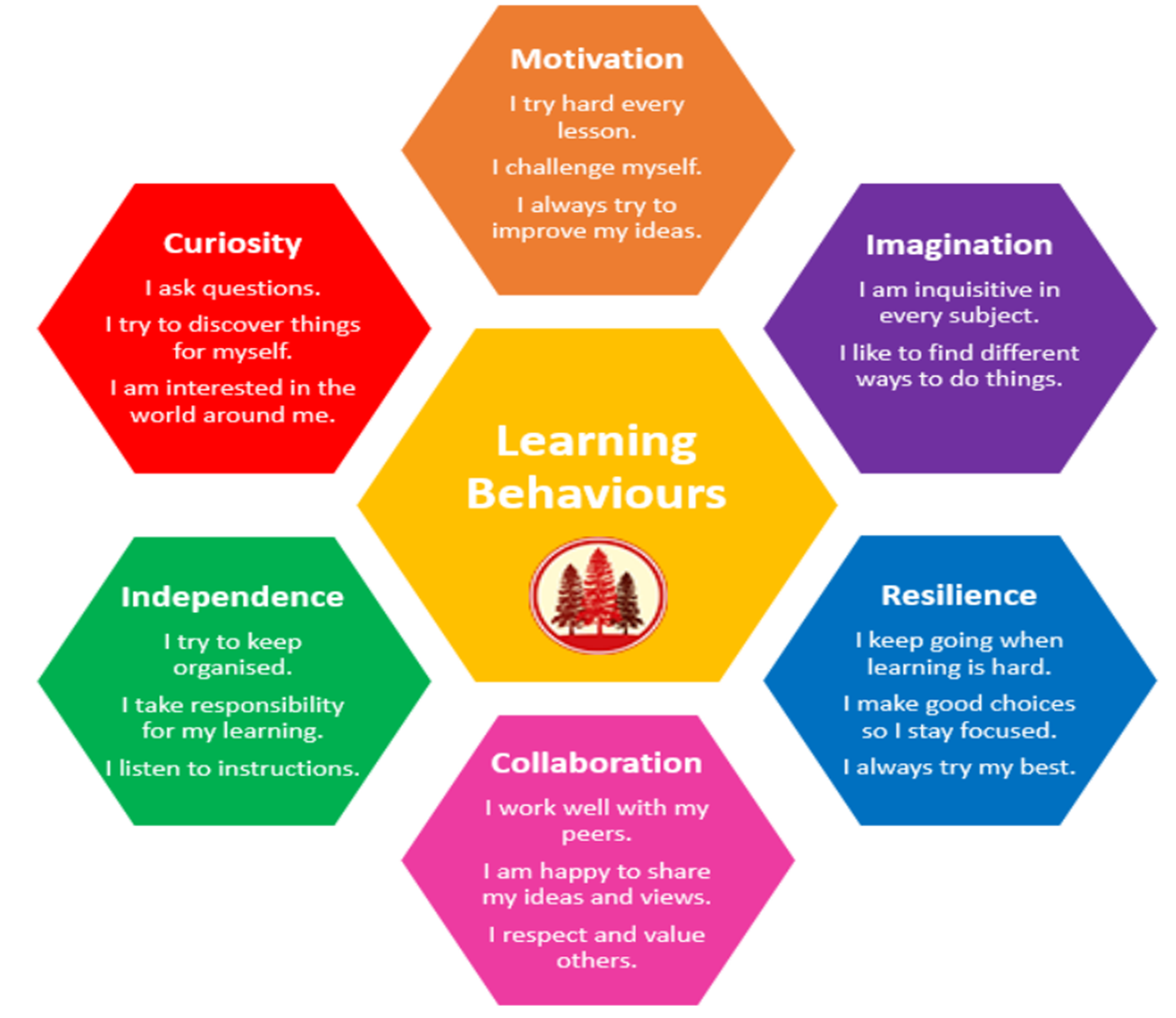
The behaviour system we use at Waddington Redwood Primary Academy is based on everyone, children and adults, demonstrating our learning behaviours.
These include: Motivation, Independence, Resilience, Curiosity, Imagination, Collaboration.
How do we promote positive behaviour?
•We build positive relationships and trust within the class and academy through positive noticing and praise.
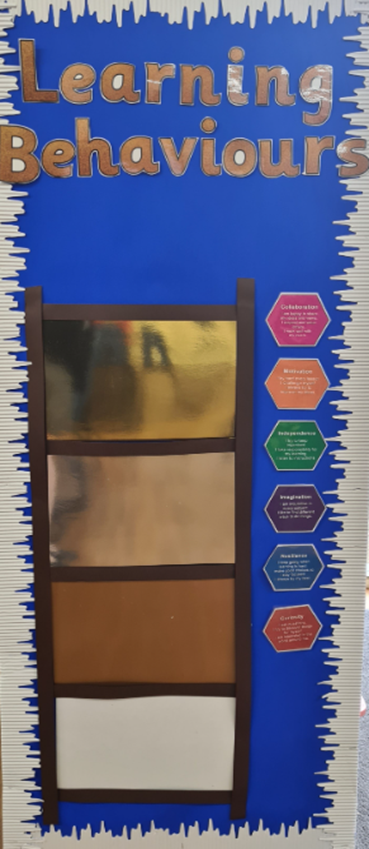
•We identify when pupils have been demonstrating our learning behaviours, ensuring the pupils' names move up our behaviour ladder.
Celebration Assembly
•Each week, teachers select two children that have demonstrated our learning behaviours from their class to receive an award during the whole school celebration assembly.
•KS1 – 2 certificates over the year to receive a bronze owl badge.
3 certificates to receive a silver owl badge.
4 certificates to receive a gold owl badge.
•KS2 – 2 certificates over the year to receive a merit badge.
3 certificates to receive a commendation badge.
4 certificates to receive an excellence badge.
Team Points
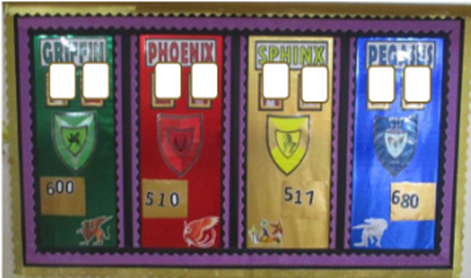
•We also have team points in school that start from year 1. This helps to build unity and collaboration across the academy as children work together to earn points for their team.
•In Y6, children get voted by their peers to be the team captains and when their team wins they receive a trophy at the end of each week and end of term, on behalf of their house team.

Role of the adult
•Adults will respond to poor behaviour with deliberate calm. By ensuring an emotionless response to the children, adults can remind them of when they have previously made the right choices to follow our learning behaviours.
•Attention will be focused on positive noticing of children that are following the learning behaviours, which are modelled by the adult.
•Adults will recognise children's effort and place children on the behaviour ladder to show their achievements.
•If a child persistently makes poor choices despite having been reminded then we follow our behaviour procedures. These are a sequence of consequences that support learning in the classroom.
We use pre scripted prompts to support pupils to demonstrate our learning
behaviours in school.
•You need to ..... (speak to me for a moment).
•I need to see you..... (follow our class routine).
•I expect ..... (to see your table tidy in the next two minutes).
•I know you will ...... (help Kyra to clean the table).
•Thank you for ..... (letting go of her coat, let's have a chat).
•I have heard what you said, now you must ..... (collect your things and calmly go to the focus area).
•We will ..... (have a better day tomorrow).
More serious behaviours are recorded on a serious incident form and parents are informed.
Restorative conversations with the children take place to support them in identifying their own thoughts and feelings, enabling them to make better choices next time.
Restorative conversations with the children take place to support them in identifying their own thoughts and feelings, enabling them to make better choices next time.